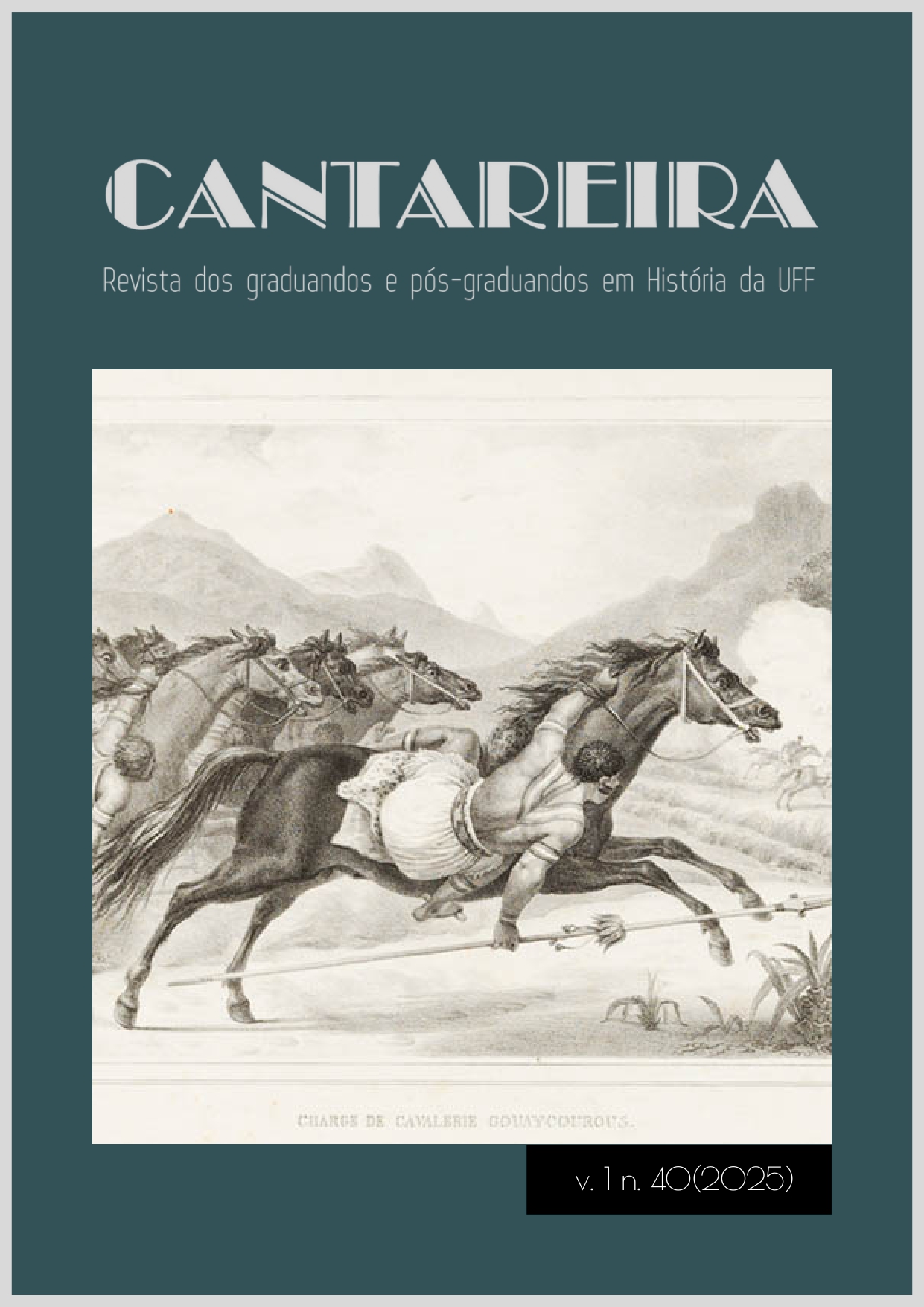
Vamos todos morrer
O legado da transmissão da História através do Humor
DOI:
https://doi.org/10.22409/s1hz5302Palavras-chave:
História, Humor, Vamos todos morrer, biografias históricas, rádioResumo
Quando a linguagem humorística versa sobre temáticas históricas, tradicionalmente encaradas com uma dose de seriedade adicional, pode representar um elemento-chave no processo do despertar da curiosidade do leitor sobre a História. O presente artigo procura estabelecer um diálogo entre os conceitos de História e Humor, a partir do programa de rádio português, Vamos todos morrer, da autoria de Hugo van der Ding, que esteve no ar entre abril de 2019 e dezembro de 2024. Procedeu-se à análise de várias edições do programa de rádio e dos respetivos textos publicados em dois livros distintos (2021 e 2023). Esta análise foi posteriormente complementada com uma entrevista por escrito realizada ao autor da rubrica radiofónica, em outubro de 2024. O Vamos todos morrer, enquanto simples programa de rádio, conseguiu desafiar o seu alcance e criar um público que procura os registos escritos do programa em livro e alimenta uma digressão de dois anos de espetáculos ao vivo. Uma comunidade cada vez mais atenta, que assume um papel mais ativo ao longo da vida do programa, e que se desdobra em novos pontos de entrada para o conhecimento. Gerou-se assim, ainda que de forma inconsciente, um fenómeno particular de construção comunitária da história.
Downloads
Downloads
Publicado
Edição
Seção
Licença
Autores que publicam nesta revista concordam com os seguintes termos:- Autores mantém os direitos autorais e concedem à revista o direito de primeira publicação, com o trabalho simultaneamente licenciado sob a Licença Creative Commons Attribution que permite o compartilhamento do trabalho com reconhecimento da autoria e publicação inicial nesta revista.
- Autores têm autorização para assumir contratos adicionais separadamente, para distribuição não-exclusiva da versão do trabalho publicada nesta revista (ex.: publicar em repositório institucional ou como capítulo de livro), com reconhecimento de autoria e publicação inicial nesta revista.
- Autores têm permissão e são estimulados a publicar e distribuir seu trabalho online (ex.: em repositórios institucionais ou na sua página pessoal) a qualquer ponto antes ou durante o processo editorial, já que isso pode gerar alterações produtivas, bem como aumentar o impacto e a citação do trabalho publicado (Veja O Efeito do Acesso Livre