
When Reaction Makes Worlds: Speculative Imagination, Legal Culture, and Political Authorization in Reactionary Worldbuilding
DOI:
https://doi.org/10.15175/0dq46w89Abstract
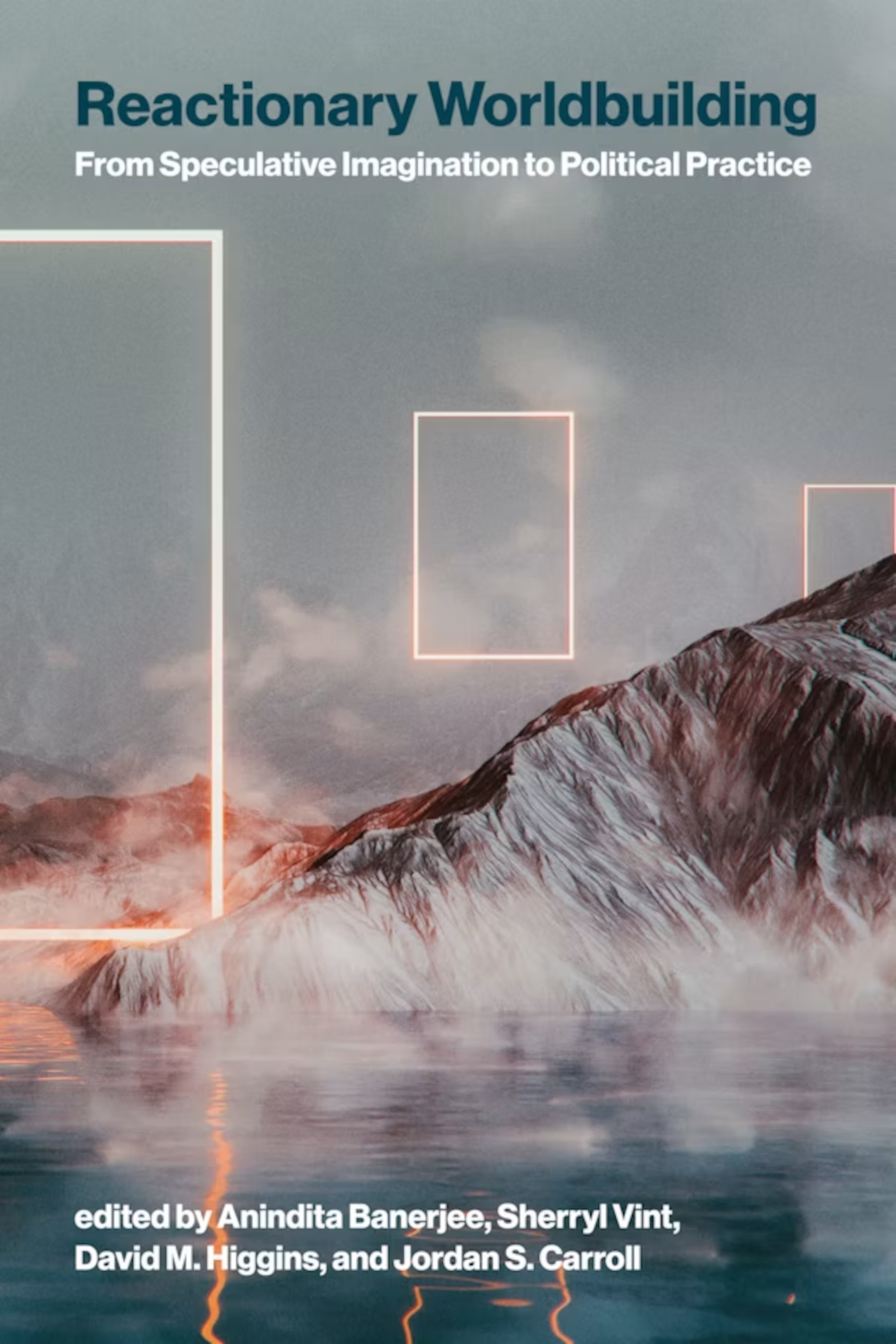
This essayistic review examines Reactionary Worldbuilding: From Speculative Imagination to Political Practice, edited by Anindita Banerjee, Sherryl Vint, David M. Higgins, and Jordan S. Carroll, from a perspective situated between political history, legal culture, and the critique of authoritarian imagination. Its central argument is that the book’s most significant contribution lies not merely in showing how speculative fiction can be appropriated by reactionary repertoires, but in demonstrating how certain narrative forms come to operate as infrastructures of political plausibility. Within this framework, reaction does not simply defend past values or reject democratic consensus; it fabricates normative worlds in which privilege appears as merit, exclusion as defense, violence as restoration, and exception as necessity. The review emphasizes the architecture of the volume, organized around plots, methods, and forms, and discusses its implications for understanding contemporary authoritarianisms, conspiracy cultures, techno-solutionism, denialism, and fantasies of sovereignty. It ultimately argues that the book offers a particularly fruitful contribution to thinking about legal culture as a field of struggle over public truth, evidentiary legitimacy, the intelligibility of conflict, and the political authorization of exclusionary practices.
Downloads
References
DIRESTA, Renée. Invisible rulers: the people who turn lies into reality. New York: PublicAffairs, 2024.
FOUCAULT, Michel. A verdade e as formas jurídicas. Tradução de Roberto Cabral de Melo Machado e Eduardo Jardim Morais. 3. ed. Rio de Janeiro: NAU, 2011.
FRIEDMAN, Lawrence M. Existe uma cultura jurídica moderna? Passagens: Revista Internacional de História Política e Cultura Jurídica, Niterói, v. 11, n. 1, p. 4-23, jan.-abr. 2019. https://doi.org/10.15175/1984-2503-201911101. Tradução de Pedro Rubim Borges Fortes.
MALM, Andreas; THE ZETKIN COLLECTIVE. White skin, black fuel: on the danger of fossil fascism. London: Verso, 2021.
RANCIÈRE, Jacques. Hatred of democracy. Translated by Steve Corcoran. London: Verso, 2009.
ROBIN, Corey. The reactionary mind: conservatism from Edmund Burke to Donald Trump. 2. ed. New York: Oxford University Press, 2018.
SCHEINVAR, Estela; SANTOS, Lukas Lobo; ANEY, Juliana. Disciplina, moral e lógica punitivo-penal: a institucionalização da escola brasileira no século XIX. Passagens: Revista Internacional de História Política e Cultura Jurídica, Niterói, v. 17, n. 1, p. 49-67, jan.-abr. 2025. https://doi.org/10.15175/1984-2503-202517104
SLOBODIAN, Quinn. Crack-up capitalism: market radicals and the dream of a world without democracy. New York: Metropolitan Books, 2023.
TOLENTINO, Caio Cardoso; SILVA, Paulo Eduardo Alves da. Processo judicial e poder político: práticas inquisitoriais no julgamento de condenação de Joana D’Arc. Passagens: Revista Internacional de História Política e Cultura Jurídica, Niterói, v. 13, n. 2, p. 191-221, maio-ago. 2021. https://doi.org/10.15175/1984-2503-202113202
Downloads
Published
Issue
Section
License
Copyright (c) 2026 Passages: International Review of Political History and Legal Culture

This work is licensed under a Creative Commons Attribution 4.0 International License.
A compromise transferring the copyright is requested, with the author’s signature, as the example below:
I / Us, ..................... , author(s) of the article/review: ................................, which
I/we have submitted to the appreciation of ‘Passagens: International Review of Political History and Legal Culture”, am/are aware of the publishing rules and
agree that the copyright related to it is transferred to the Publishing. I (we) take full responsibility for the content of this article; and is will contribute to the Editors to undertake the changes suggested by the evaluators and the review of bibliographic quotations.
__________________, ____/_____
Signature: ________________________________