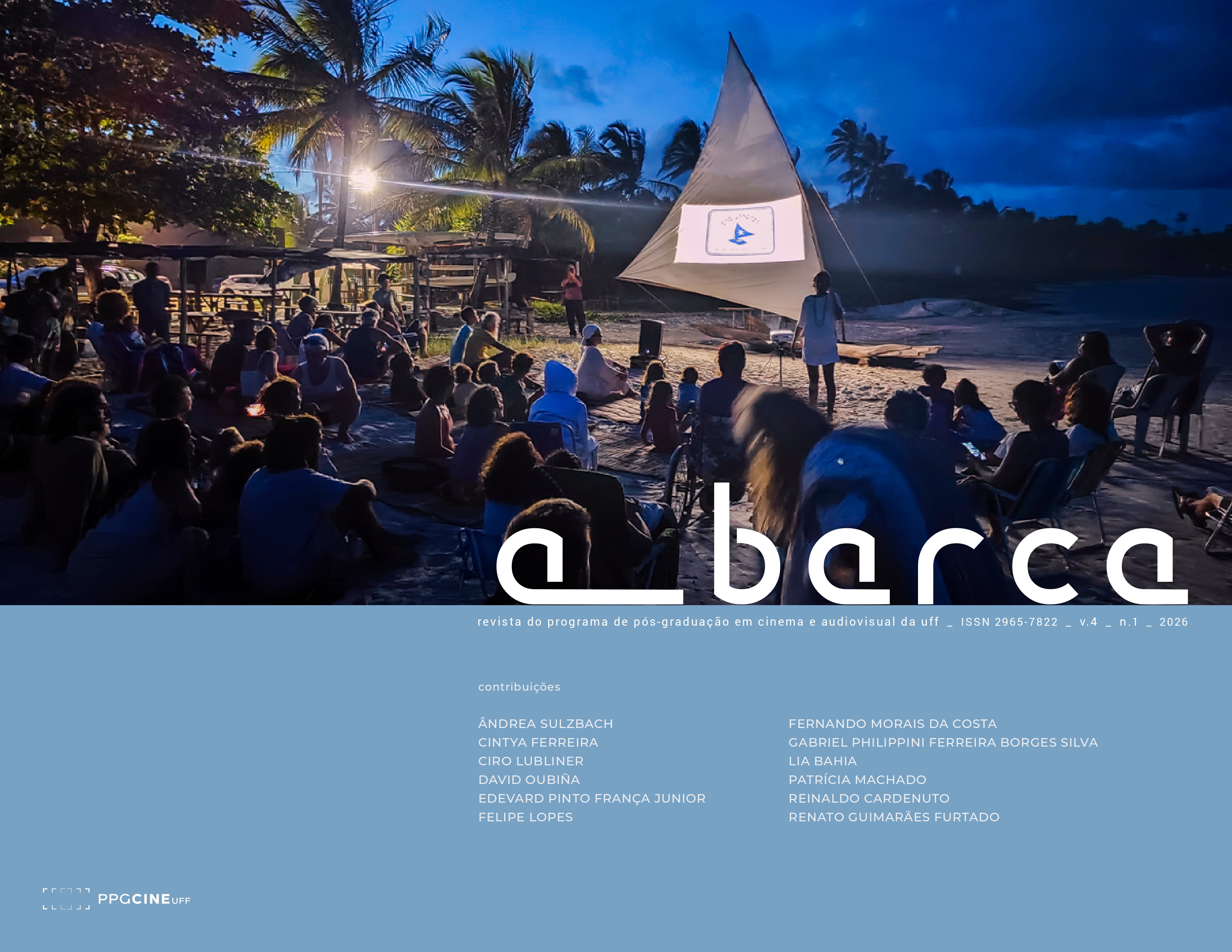
A Barca é o periódico do Programa de Pós-graduação em Cinema e Audiovisual da Universidade Federal Fluminense - PPGCine UFF. Em formato digital e com publicação semestral, destina-se à divulgação de estudos teóricos ou práticos sobre Cinema e Audiovisual, e suas interações com outros campos de conhecimento e com as diferentes sociedades. O enfoque de A Barca procura unir a trajetória dos estudos de Cinema e Audiovisual na UFF a contextos e temas emergentes e às novas dinâmicas simbólicas, econômicas, éticas, estéticas e políticas da experiência audiovisual e midiática.
Current Issue
Vol. 3 No. 1 (2025): v. 3 n. 1 (2025): Queens, Kings, Monsters: Transformist Practices and Drag in Film and Media
In this fifth issue, A Barca presents the dossier “Queens, Kings, Monsters: Transformist Practices and Drag in Film and Media,” organized through an international partnership between Sancler Ebert (UFF/FMU-FIAAM), Douglas Ostruca (UFRGS), and Agustina Trupia (CONICET-UBA). The dossier comprises eight texts: one visual essay, two articles, three contributions to the Free Section, and two interviews. Further details are available in the dossier’s introduction, authored by Ebert, Ostruca, and Trupia.
This voyage also features an article, a translation, and the first installment of the encyclopedia Cinemas in Confrontation: Short and Medium-Length Films in Response to the Brazilian Military Dictatorship, covering the period from 1964 to 1968. The encyclopedia is coordinated by Reinaldo Cardenuto (UFF), Patrícia Machado (PUC-RJ), and Cintya Ferreira (UFF). In the article “E os Novos Baianos te podem curtir numa boa": A Genealogy of ‘Curtição’ between Marginal Cinema and Brazilian Popular Music, Rafael Mendonça Dias (UFF) investigates curtição (a Brazilian Portuguese term blending “fun” and “political/artistic engagement”) as a creative and political gesture during the Brazilian civil-military dictatorship (1964-1985). Our final boarding is the translation “Mindscapes, Mental Landscapes: Spaces of Memory in Contemporary Cinema,” translated from German by researchers Gina Brusamarello (UFRGS), Hedy Hofmann (UFRGS), Milena Hoffmann Kunrath (PUCRS), and Pedro Theobald (PUCRS).
Published: 2025-08-19